Why Is Online Gambling Illegal in the US?
Why Is It Illegal to Gamble Online in the US?
Online gambling is not illegal everywhere in the United States, but it is not legal everywhere either. The main reason is that gambling rules are controlled by both federal law and individual state laws, which means the answer depends on where you live and what type of gambling you want to play.
Federal Laws Restrict Online Gambling
The federal government does not operate a single nationwide online casino or sportsbook system. Instead, federal laws limit gambling activity that crosses state lines, uses certain communication systems, or involves banks and payment companies.
One important law is the Wire Act of 1961. It was written long before the internet, but it applies to telephone lines and other wire communications used to send bets or betting information across state or national borders. For many years, it was used to challenge online sports betting operations.
Another major law is the Unlawful Internet Gambling Enforcement Act, commonly called UIGEA. Passed in 2006, it does not ban every online bet in America. Instead, it stops gambling businesses from knowingly using credit cards, checks, electronic transfers, and other bank-related payments to process unlawful internet gambling transactions.
States Decide What Is Legal
Each state has the power to decide whether online gambling is allowed inside its borders. This is why online gambling laws can be very different from one state to another.
For example, one state may allow licensed online sports betting, online casinos, and online poker. Another state may allow only sports betting, while a third may prohibit online gambling almost completely. A person can legally place a bet in one state, then cross into another state where the same app or website is not permitted.
This state-by-state system exists because gambling has traditionally been regulated locally in the United States. States decide how to protect consumers, collect tax revenue, license businesses, and handle gambling-related crime.
Operators Face More Rules Than Players
Federal gambling laws usually focus more on the people and companies running gambling sites than on individual players. The UIGEA, for instance, places restrictions on gambling businesses and payment processors rather than creating one nationwide law that makes every online bet illegal.
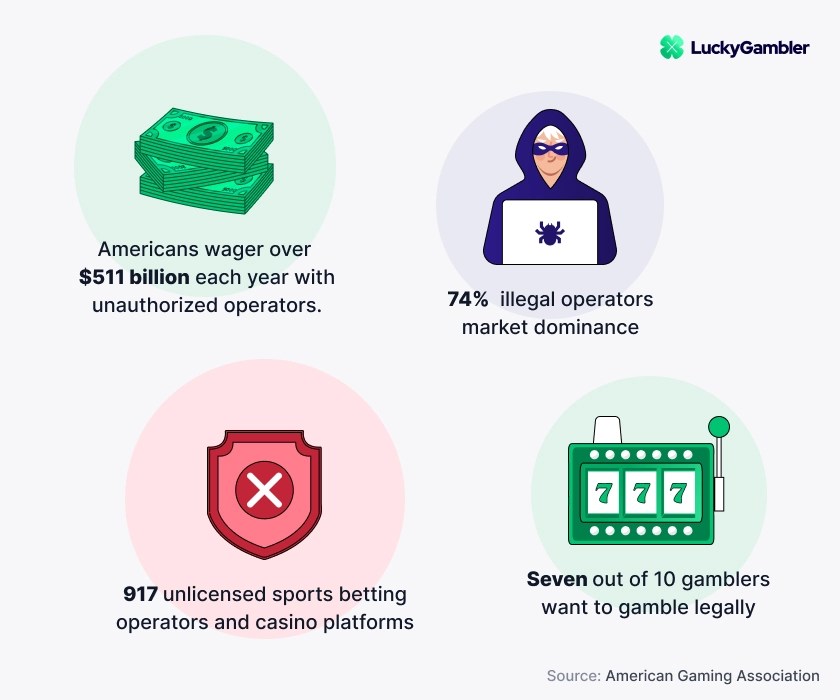
This matters because many offshore websites accept customers from the United States even though they are not licensed by any U.S. state. These sites may be difficult to regulate, may not protect player funds, and may not offer legal help if a customer has a dispute.
Why Lawmakers Are Careful
Lawmakers restrict online gambling for several practical reasons. They want to protect consumers from unfair games, delayed payments, identity theft, and websites that disappear with customer money.
They are also concerned about underage gambling. Online platforms are available through phones and computers, so strong age checks and location checks are needed to keep minors from placing bets.
Problem gambling is another concern. Because online gambling is available at any time, it can be easier for someone to lose track of money and time. Legal states try to reduce this risk through deposit limits, self-exclusion programs, and responsible-gambling tools.
Crime and Money Are Also Concerns
Illegal gambling can be connected to money laundering, tax evasion, and organized crime. Federal laws such as the Illegal Gambling Business Act, the Travel Act, and money-laundering laws can apply when a gambling business operates unlawfully or handles criminal proceeds.
By requiring licenses, audits, and regulated payment systems, states try to keep gambling money traceable and taxable. This is one reason legal online gambling is usually run by approved companies rather than open to any website that wants to accept bets.
What This Means for Players
If you want to gamble online in the United States, the safest approach is to use a website or app that is licensed in the state where you are physically located. Legal platforms must follow state rules, verify your identity and location, and provide consumer protections.
Avoid offshore casinos and sportsbooks that claim to accept U.S. players but do not hold a state license. Even if they appear easy to use, they may not protect your money, personal information, or winnings.
The Bottom Line
Online gambling is illegal in the U.S. only when it breaks federal law or the law of the state where the player is located. It is legal in states that have passed laws allowing licensed online gambling and illegal in states that have not.
The key is simple: check your state’s rules, confirm that the platform is licensed, and never assume that a gambling site is legal just because it accepts U.S. customers.
LuckyRush Casino – Games, Account Access & Player Guide
This site only collects related articles. Viewing the original, please copy and open the following link:Why Is Online Gambling Illegal in the US?